Production scheduling in Nepal
When to film in Nepal
Nepal does not have a good season and a bad season. It has four windows, and each one takes something away from you. Autumn gives you clean air and takes away availability. Winter gives you clarity and takes away daylight and high access. Spring gives you warmth, flowers and long days, and can take the mountains out of frame entirely. Monsoon takes away reliable travel and is the only time you can film the monsoon. The scheduling question is not which month is best. It is what your film can afford to lose.
There are also two calendars running at once. Flights, visas and hotels work on the Gregorian year. Festivals and public holidays mostly work on lunar reckoning inside the Bikram Sambat calendar, which means the dates you need move by weeks from one year to the next, and the weeks when government offices effectively close move with them.
Altitude adds a third dimension. The same week that is warm and open at 800 metres can be closed by snow at 5,000, so a national calendar is only ever half the answer. The other half is the height your unit will actually stand at, and how fast it gets there.
What follows is the shape of the year as a scheduling problem: season by season, then month by month, with the light, the flights, the festivals and the altitude all read together. Conditions, rules and flight arrangements in Nepal change, so treat every item here as a starting point to verify against the current position rather than a settled fact. Nothing below is a promise about weather, access or approval.
The year in figures
Verifiable facts that shape every schedule, before a single festival date is checked.
The shape of the year
Nepal runs from around 60 metres in the Terai to over 8,800 metres in a horizontal distance of about 200 kilometres, so a single date means four different climates depending on where the unit is standing. The monsoon is the organising fact. It usually arrives from the east around the middle of June and withdraws through late September, and every other window is defined by its distance from that. Autumn is the clean air that follows the rain. Winter is the cold, dry high pressure that follows autumn. Spring is the warming, dust-loading run up to the next monsoon. Read the calendar from the rain outward and the rest falls into place.
Those four windows are not four equal quarters. The clear post-monsoon spell that everyone wants is short, perhaps six to eight weeks. The pre-monsoon haze can settle in for a couple of months. The monsoon itself is long and the deep-cold heart of winter is narrow. So the honest planning unit is not the season, it is the window inside the season, and it moves a little every year with the timing of the rains.
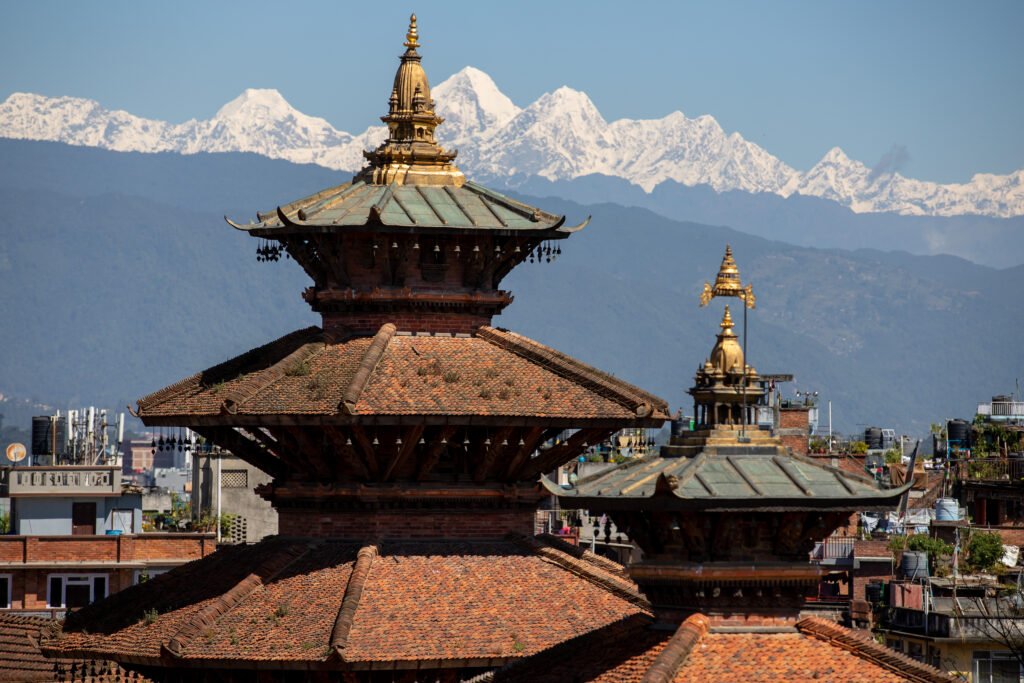
The country is also three countries stacked north to south. The Terai is subtropical plain that shares its weather with the Gangetic north of India. The middle hills, where most of the towns, temples and terraced valleys sit, are temperate and this is where haze and cloud do the most damage to a mountain shot. The high Himalaya and the trans-Himalayan valleys behind them are alpine and then near-desert. A schedule that crosses all three in a fortnight is really three schedules, and each has its own rules for light, travel and comfort.
Daylight, ridgelines and the morning rule
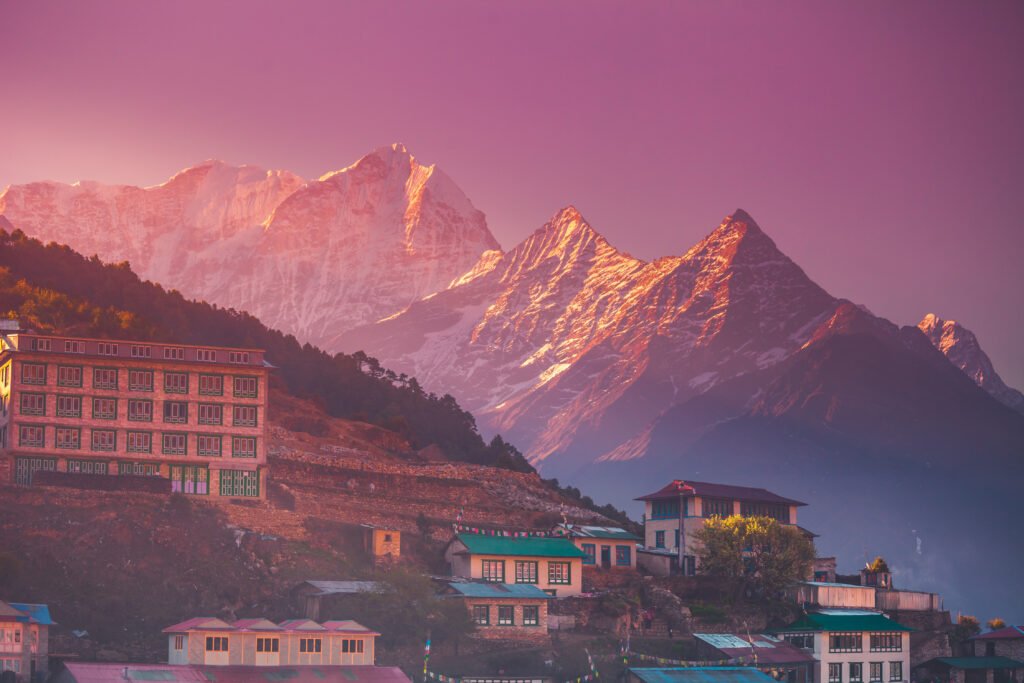
Daylight matters more than producers expect. Kathmandu sits near 28 degrees north, so the day swings from roughly ten and a half hours around the winter solstice to about thirteen and a half in June. The almanac is optimistic. In a steep valley the sun clears the ridge late and drops behind it early, and a north-facing valley floor in December can give you five or six hours of usable light with a long, flat, cold shadow either side. When you scout, note the ridge line, not just the sunrise time, and note which way the valley faces, because a south-facing slope and the north-facing slope across from it are on completely different clocks.
The other constant is the morning. Convective cloud builds from late morning, valley winds get up, and haze settles into the middle distance. Long lens work, aerials, drone and mountain flights belong in the first hours of the day, all year round. Put dialogue, interiors and pick-ups in the afternoon and you will lose far less. This is the single most reliable rule in Nepal scheduling, and it holds in every season: the mountains are a morning subject and almost everything else is flexible around them.
Golden hour is not evenly useful either. Morning light in Nepal is usually the cleaner of the two, because the air has settled overnight and the dust and smoke of the day have not yet risen. Evening can be warmer in colour but hazier in fact. If a hero mountain shot has to be golden, plan it for dawn and treat any evening version as a bonus rather than the plan.
Season by season
The four windows compared on the terms that actually drive a schedule. Read every cell as typical, not guaranteed.
| Season | Air and visibility | Daylight and temperature | Travel and access | Suits | Watch for |
|---|---|---|---|---|---|
| Autumn (Oct to Nov) | The cleanest air of the year once the monsoon has washed the dust out | Shortening but still generous days, comfortable at altitude, cool nights | Passes usually open, but flights, lodges, vehicles and crew are heavily committed | Mountain visibility, trekking narratives, Dashain and Tihar, Mani Rimdu | Availability, out-of-season storms, tall grass in the Terai parks |
| Winter (Dec to Feb) | Often very clear and stable, snow sitting properly on the peaks | Shortest usable light, cold, hard frosts and cold high camps | Quiet trails, easier crew and vehicles, but high passes can block and lodges close | Empty locations, crisp peaks, valley and monastery interiors | Short days, Terai radiation fog, Kathmandu inversions, emptied high villages |
| Spring (Mar to May) | Long dry spell with rising dust, crop burning and hill fires, often hazy | Long, warming days, hot in the Terai, pleasant at altitude | Passes reopening, roads generally good, building afternoon storms late in the season | Rhododendron, Everest and 8,000 m base camps, spring festivals | Poor mountain visibility from the middle hills for days at a time |
| Monsoon (Jun to Sep) | Cloud on the hills for days, but washed and vivid green between spells | Long days, warm and very humid, heavy in the Terai | Unreliable: flight cancellations, landslides and road closures | Rice planting, waterfalls, flooding, the season as subject, the rain shadow north | Disruption, leeches, humidity in optics, stranded legs |
The four windows at a glance
The same four windows as quick briefs, in the order the year runs after the rains.
Autumn: clear and contested
The post-monsoon weeks give the best air and the most crowded diary. If mountain visibility is the film, this is the window, but decide early, because seats, lodges, vehicles and experienced crew go a long way out and cannot be conjured on the ground.
Winter: clean, cold, short
Stable air, empty locations and snow on the peaks, paid for with short days, hard cold and blocked high passes. Strong for quiet valleys, monasteries and crisp ranges, wrong for upper-village life when families have moved down.
Spring: warm and flowering
Long days, rhododendron climbing the hills and the main season on the big peaks, set against the year’s worst haze from the middle hills. Plan to go higher and get above the murk, or build visibility alternatives you can accept.
Monsoon: green and unreliable
The only window for rice terraces, full waterfalls, flooding and the season itself, at the cost of predictable travel. The rain shadow north of the range stays comparatively dry, but you reach it through country that is firmly inside the rain.
October and November: clearest, and the most contested
The weeks after the monsoon withdraws are the cleanest air Nepal gets. The dust has been washed out, high pressure is comparatively stable, temperatures at altitude are workable, the hills are still green in October and the passes are usually open. It is also when Dashain, Tihar and, in the Khumbu, Mani Rimdu at Tengboche fall.
The constraint here is not weather, it is availability. Trekking groups, expeditions, stills crews and broadcast units all want the same six weeks. Domestic seats, mountain lodges, vehicles and experienced local crew get committed a long way out. If you decide on this window late, what you lose is options rather than anything you can fix on the ground. The earlier you commit, the more of autumn you actually get to use.
Autumn is not a clear-sky guarantee either. Late cyclones in the Bay of Bengal have pushed heavy out-of-season snow and rain into the high country in October, closing passes and grounding flights for days. Building a tight schedule with no slack because the calendar says October is a common and expensive mistake. The window is the best odds of the year, not a certainty, and the difference between odds and certainty is exactly the number of weather days you carry.
One caveat for the Terai. After the monsoon the grass in Chitwan and Bardia is at its tallest, so wildlife sightlines in October are poor even though the light is excellent. If the film is wildlife rather than landscape, the good Terai months and the good mountain months are not the same, and autumn favours the mountains.
December to February: clean, cold, short
Winter is underrated for anything that needs stable air and empty locations. Skies are often very clear, snow sits properly on the peaks, and the trails, monasteries and viewpoints that are congested in autumn are quiet. Crew and vehicles are easier to secure, and the light, though short, is beautifully hard and clean in the middle of the day.
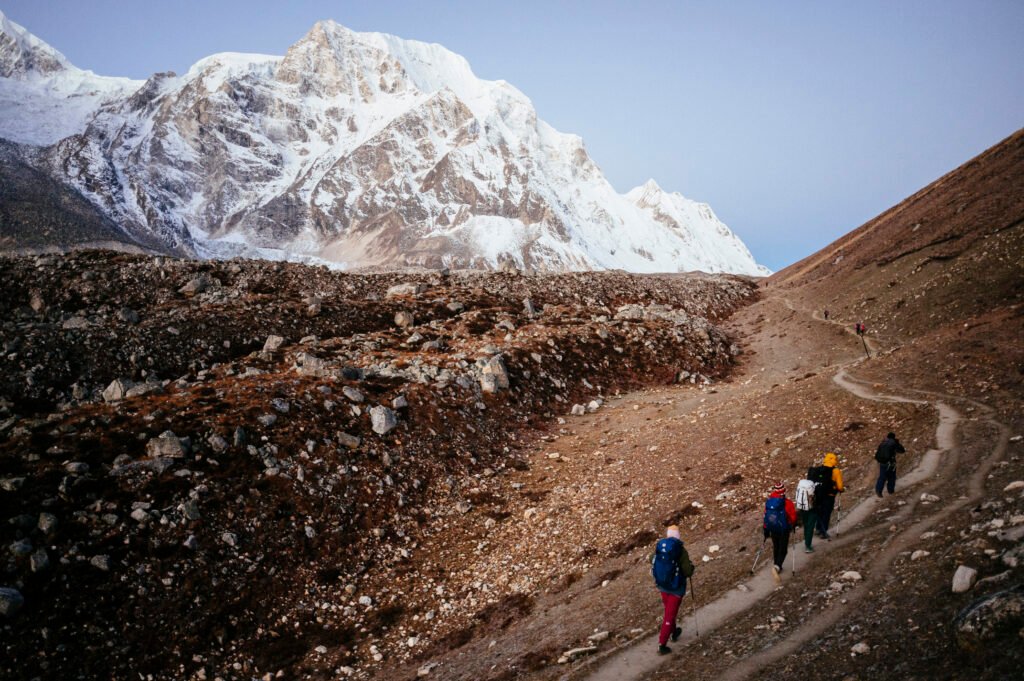
What you pay for it is daylight and access. High passes including Thorong La, Larke La and the Cho La and Renjo La side of the Khumbu can be blocked by snow or turn serious with little warning. Many high lodges close or run with minimal staff. In Upper Mustang and parts of Manang, families traditionally move to lower ground for the winter, so whole settlements thin out. If the story needs upper-valley village life, deep winter is the wrong time to ask for it.
Fog is two separate problems and they contradict each other. The Kathmandu Valley gets winter inversions that hold pollution down and delay morning departures. The Terai gets dense radiation fog that can hold up flights into Bharatpur, Bhairahawa, Simara and Nepalgunj for hours and makes the east-west highway slow at night. In the hills you fly early. In the Terai in midwinter, early is the problem, because the fog often clears only by mid to late morning. A schedule that moves between the two needs both rules written into it, and the same call time that is right in Pokhara can be wrong in Bharatpur on the same morning.
Winter is also when community grass cutting happens in the Terai parks, and sightlines open up considerably afterwards. Wildlife remains wildlife. Nobody can promise you a tiger, but your odds of seeing across open ground are far better in the late-winter parks than in the tall grass of autumn.
March to May: warm, flowering, and often hazy
Spring gives you long days, comfortable temperatures at altitude and rhododendron. The bloom moves up the hill with the season, generally starting in the lower forests and working higher into April and May, and the exact week in any given valley depends on that year’s winter. Treat a bloom date as a range you might miss, not a fixture you can build a call sheet around.
The risk is visibility. Through the dry pre-monsoon, dust, crop residue burning and hill and forest fires load the air across the middle hills and the Terai. In a bad spring the Himalaya are simply not there from viewpoints below them for days on end. If the film depends on seeing the range from Nagarkot, Poon Hill, Sarangkot or a middle-hills village, spring carries more visibility risk than any other window, including monsoon in the rain shadow. Build alternatives, or go higher and get above it. A viewpoint at 3,000 metres or above will often sit over the worst of the murk when a viewpoint at 1,500 metres is looking into a wall of it.
What spring does own: this is the main climbing season on Everest and the other 8,000 metre peaks, so base camps are occupied and the high routes are populated in a way they are not in autumn. It is also when the Terai is hot and dry, water is scarce, grass has been cut or burnt back and wildlife concentrates at the remaining water. Bisket Jatra in Bhaktapur falls around the Nepali new year in mid-April, Buddha Jayanti lands on the Vaisakha full moon, and the Rato Machhindranath chariot procession in Patan runs across weeks in the spring. Afternoon thunderstorms start building from late April, which is a warning for aerials and a gift for anyone who wants dramatic cloud.
June to September: the monsoon and the rain shadow
The monsoon takes away predictability. Domestic flights cancel, roads take landslides, and the Prithvi and Narayanghat corridors can close and strand a unit for days. Cloud sits on the hills for a week at a time. Forests have leeches. Humidity gets into optics, and anything not sealed and silica-packed will suffer.
What it gives you exists nowhere else in the calendar. Rice transplanting runs through late June and July, the terraces are the green they are famous for, waterfalls carry real volume, cloud moves through the valleys, and the Terai floods. If the subject is water, agriculture, climate, migration or the season itself, this is the only window. The tail of the monsoon also carries Teej and, in Kathmandu, Indra Jatra.
North of the main Himalayan range, Mustang, Dolpo, Manang, Nar Phu and Humla sit in the rain shadow and get a fraction of the rainfall. Conditions up there can be workable through July and August. The catch is the doors. You reach them through Pokhara, Nepalgunj or the road up the Kali Gandaki gorge, all of which are inside the monsoon. Plan those legs as fully weather-contingent and put spare days at each end rather than in the middle, so a delayed door does not eat the days you needed for the dry country beyond it.
One local rule worth knowing: the up-valley wind in the Kali Gandaki gets strong from late morning, so Jomsom flights and drone work there are a morning task in every season. Off-peak has advantages too. Crew, vehicles and lodges are available, and the locations that are shoulder to shoulder in October are empty, so if the film can absorb the disruption it can also enjoy the space.
Month by month
A rolling reference across the Gregorian year. Festival entries move with the lunar calendar, so confirm the current year’s dates before you rely on any of them.
| Month | Typical conditions | What it suits | What to watch |
|---|---|---|---|
| January | Cold and often very clear, snow on the peaks, short days | Crisp ranges, quiet trails, monasteries, late-winter Terai parks | Kathmandu inversions, Terai radiation fog, blocked high passes |
| February | Cold easing, still clear, days lengthening a little | Peaks and interiors, Shivaratri at Pashupatinath in some years | High access still limited, cold high camps, early haze building |
| March | Warming, lower-forest rhododendron, haze starting to load | Mid-hill flowers, spring festivals, hot Terai wildlife at water | Rising dust and the first hill fires reducing mountain visibility |
| April | Warm and long, rhododendron higher up, main climbing season | Base camp activity, high routes, new year and Bisket Jatra | Poor range visibility from the middle hills, afternoon storms late |
| May | Hot and hazy before the rains, thunderstorms building | High country greening, expedition summits, dramatic cloud | Heat in the Terai, worst pre-monsoon haze, unsettled afternoons |
| June | Pre-monsoon heat then the rains arriving from the east | Rice preparation, the break of the monsoon as subject | Onset timing varies, first flight and road disruption |
| July | Full monsoon, heavy in the Terai, green everywhere | Rice transplanting, waterfalls, the rain shadow in the north | Landslides, cancellations, leeches, fiscal year-end in offices |
| August | Monsoon continuing, cloud and humidity, vivid terraces | Flooding and climate stories, Teej, dry trans-Himalaya | Stranded legs, humidity in kit, unreliable domestic flights |
| September | Monsoon withdrawing through the month, clearing late | Late-monsoon green, Indra Jatra, the first clear spells | Withdrawal timing varies, tail-end storms, roads still soft |
| October | Clean air arriving, stable high pressure, hills still green | Mountain visibility, trekking, Dashain and Mani Rimdu | Peak demand, out-of-season storms, tall grass in Terai parks |
| November | Clear and cool, excellent visibility, days shortening | Peaks with people still on the trails, Tihar, high viewpoints | Heavy demand continuing, cold setting in at altitude, Chhath |
| December | Cold and clear, snow settling, shortest days of the year | Empty locations, crisp ranges, valley and monastery interiors | Short usable light, passes blocking, high lodges closing |
Nothing here is a guarantee
Every condition on this page is a typical pattern, not a promise. Weather, flight availability, access and approvals all vary by year, region and altitude, and they change. We confirm the realistic current position for your specific dates and locations before you commit money, and we would rather tell you a window is wrong than sell you into it.
How altitude changes the calendar
The national seasons are only half the story. The other half is height. A week that is warm and open at 800 metres in the middle hills can be shut by snow at 5,000 metres on the same day, and the calendar you actually shoot to is the one for the altitude band your unit will stand at, not the one for the country as a whole.
Up high, the usable window narrows to two shoulders on either side of the monsoon: broadly late spring before the rains, and autumn after them. High passes such as Thorong La, Larke La and Cho La are generally crossable from around April into early June and again from late September into November, and never as a certainty, because a single storm can close them out of season in either direction. Between those shoulders, deep winter locks the high routes with snow and cold, and the monsoon buries them in cloud even where the trails stay open.
Altitude also flips the meaning of a season. Deep winter empties the high villages of Mustang, Manang and the upper valleys as families move to lower ground, so the very window that gives you the cleanest air down in the hills takes upper-valley life out of reach. Monsoon, meanwhile, is the disaster for the middle hills but the working window for the trans-Himalayan north, where the rain shadow keeps Mustang and Dolpo comparatively dry through July and August. If the film lives above about 3,000 metres, plan its calendar first and fit the low-altitude days around it, not the other way round.
There is a schedule cost as well as a calendar one. Gaining height quickly costs you people, not time, so acclimatisation days are structural, not padding, and they land inside whatever window you have chosen. That interacts with the season: the short days of winter and the afternoon storms of late spring both eat into the hours you have to move safely between camps. The deeper mechanics of pacing, health and evacuation are a subject in their own right and belong on the filming-at-altitude guide, but for scheduling the point is simple. The higher the film goes, the shorter and firmer its window becomes.
A scheduling glossary
The handful of terms that recur whenever dates are discussed in Nepal.
Bikram Sambat
Nepal’s official calendar, roughly 56 to 57 years ahead of the Gregorian calendar, with the new year in mid-April. Public holidays and most festivals are reckoned against it, so their Gregorian dates move year to year.
Patro
The Nepali almanac or calendar. The current year’s patro is the source of truth for festival dates, public holidays and auspicious days, and it is what you check rather than carrying dates over from a previous schedule.
Rain shadow
The comparatively dry country north of the main Himalayan range, including Mustang, Manang and Dolpo, which receives a fraction of the monsoon rainfall and can stay workable through the summer.
Radiation fog
Dense ground fog that forms on still, clear winter nights, common in the Terai, which can delay flights and slow roads until it burns off in mid to late morning.
Inversion
A winter condition in the Kathmandu Valley where a cap of warmer air traps cold, polluted air near the ground, holding down haze and delaying early departures.
Weather day
A contingency day built into the schedule specifically to absorb a cancelled flight, a blocked road or a lost mountain morning. Treated as a line item, not as goodwill.
Shoulder season
The transitional weeks either side of a peak window, when demand, prices and crowds ease but conditions are less settled. In the high country the two shoulders around the monsoon are often the only workable windows.
Morning window
The first hours after sunrise, when air is cleanest and winds lightest, and when long lens, aerial, drone and mountain-flight work is scheduled in every season.
Festival dates move, and so does the government
Nepal’s official calendar is Bikram Sambat, roughly 56 to 57 years ahead of the Gregorian calendar, with the new year in mid-April. Most festivals are fixed by lunar reckoning, so their Gregorian dates shift by weeks year to year. Never carry a festival date across from a previous schedule. Check the current year’s Nepali calendar, the patro, and check which day of a multi-day festival actually carries the event you want, because the procession, the sacrifice, the masked dance and the immersion are often days apart.
A few sit closer to the solar calendar and hold roughly steady, such as Maghe Sankranti in mid-January and Bisket Jatra around the new year. Others can move while they are happening. The Rato Machhindranath jatra in Patan has been delayed and rescheduled mid-procession. Treat a festival as a window, not a date, and do not book a departure flight against its last scheduled day.
Dashain and Tihar are the scheduling event of the year. They fall inside the same autumn window everyone wants, and the country slows for an extended stretch across the two. Government offices, banks and many businesses close or run skeleton staff, people travel to their home districts so drivers and vehicles are committed and the roads out of Kathmandu are heavy, and Chhath follows in the Terai. Anything that needs a signature, a filming permission, an area permit, a drone approval or customs clearance on incoming gear should be finished well before that period, not chased through it.
Note also that the office week is not Monday to Friday: Saturday is the weekly holiday and Friday can be a short day, so a week of processing is not five working days. The working week has been changed by government decision before, so confirm the current position. Mid-July also sits at the end of the Nepali fiscal year, which occupies offices with their own year-end. Festivals can be something to plan toward as much as around: if the film wants Dashain, Tihar, Indra Jatra or Mani Rimdu as content, the date moves to the centre of the schedule and everything else arranges itself around it.
A year of festivals to plan around or toward
A rough procession through the Gregorian year. Every window here moves with the lunar calendar unless noted, so confirm the current dates and which day carries the event you want.
- Mid-January
Maghe Sankranti
A mid-winter festival that sits close to the solar calendar and holds roughly steady in date. Ritual bathing and gatherings at river confluences, in the cold, clear heart of the visibility season.
- February to March
Shivaratri and Holi
Shivaratri draws large crowds to Pashupatinath in Kathmandu. Holi follows, and note that the hills and the Terai mark it on different days, so a single date will not cover both.
- Mid-April
Nepali new year and Bisket Jatra
Bisket Jatra in Bhaktapur falls around the new year and sits close enough to the solar calendar to hold roughly steady, with chariot-pulling and large crowds in the old town.
- April to May
Buddha Jayanti and the spring chariots
Buddha Jayanti lands on the Vaisakha full moon, and the Rato Machhindranath chariot procession in Patan runs across weeks in the spring and has been rescheduled mid-procession before.
- August to September
Teej and Indra Jatra
The tail of the monsoon carries Teej and, in Kathmandu, Indra Jatra, with masked dances and the chariot of the living goddess through the old city, amid the clearing late-monsoon light.
- September to November
Dashain, Tihar, Chhath and Mani Rimdu
The great autumn cluster, inside the most contested visibility window. Dashain and Tihar slow the country and the offices, Chhath follows in the Terai, and Mani Rimdu falls at Tengboche in the Khumbu.
How to choose your window
A way to reason from the film to the dates, rather than from a calendar to a hope.
Name the non-negotiable image
Decide what the film cannot lose. Clean peaks, rhododendron, rice terraces, a named festival, expedition activity or empty locations each point at a different window, and some of them are mutually exclusive. If there are two, work out whether one shoot can hold both or whether it is really two trips.
Set the altitude band
Establish the highest the unit will stand and for how long. That decides whether you are working to the national seasons or to the narrower high-country shoulders around the monsoon, and it sets the acclimatisation days you must carry inside the window.
Lay the festivals over the top
Check the current year’s patro. Mark any festival you want as content, and mark Dashain, Tihar, Chhath and the fiscal year-end as periods when offices and roads slow. Decide whether you are planning toward a festival or around a shutdown, because you cannot treat both the same way.
Weigh visibility against availability
Autumn buys the best air at the highest competition and least slack. Winter and monsoon buy space and availability at the cost of light or reliability. Spring buys flowers and long days at the cost of haze. Pick the trade you can defend to the edit, not the one that reads best on a calendar.
Build the window with slack, then verify
Add weather days at both ends of every flight-dependent leg, bias the shooting day to the morning, and confirm the current position on flights, permits, passes and airport routings close to the shoot rather than at the recce. Then lock.
The scheduling question is never which month is best. It is what your film can afford to lose, and every window in Nepal charges a different price.
How we workBuilding a schedule that survives contact
Bias the day forward. Most of what depends on air, light and aircraft happens before late morning, so call sheets built around a conventional day will lose the mountains repeatedly. Put weather days in as line items, not as goodwill, and put them at both ends of any leg that depends on a flight. If a fixed-wing mountain flight or a helicopter is the only way in or out, the number of days you can afford to be stuck is the real definition of that location’s feasibility.
Confirm departure airports close to the shoot. Lukla operations have in some busy seasons been moved out of Kathmandu to Manthali in Ramechhap, which adds a road transfer of several hours starting well before dawn. That kind of arrangement has changed more than once, so verify it at the time of the shoot rather than at the time of the recce. Treat altitude as schedule, take independent medical advice for the crew, and check that your insurance actually covers the altitudes, the activities and the evacuation you are assuming. No fixer, operator or guide can assure you of medical care or of a helicopter reaching you, and weather can stop flying for days. Above all, assume the rules have moved: permit categories, drone requirements, park arrangements and airport routings have all changed in recent years, so verify the current position before you commit, including against anything written here.
If your film needs X, aim for Y
A quick lookup from subject to window. Where two subjects point at different months, that is usually the sign of two shoots rather than one.
| If your film needs | Aim for | Avoid or watch |
|---|---|---|
| Clean mountain visibility from the middle hills | Late October into December, with January and February close behind | April and May, when haze can hide the range for days |
| Snow on the peaks with people still on the trails | Late November into December | Deep winter high routes, which can be blocked |
| High passes such as Thorong La, Larke La and Cho La open | Roughly April to early June and late September into November | Any certainty; a storm can close them out of season |
| High-altitude village life in Mustang and Manang | Spring through autumn | Deep winter, when many families have moved down |
| Rhododendron forest | March lower down, April into May higher up | Fixing a bloom date; treat it as a range |
| Expedition and base camp activity on the 8,000 m peaks | April and May | Autumn, when the high peaks are far quieter |
| Rice planting and the green terraces | Late June into July | The dry months, when the terraces are bare |
| Rain, cloud, landslides and flooding as subject | July into early September | Building tight legs; travel is unreliable |
| Hot, dry Terai with wildlife concentrated at water | April and May | Autumn tall grass; sightlines are poor |
| Better Terai wildlife sightlines | January to March, after the winter grass cutting | October, when the grass is at its tallest |
| Dashain and Tihar as content | October or November, depending on the year | Chasing paperwork through the same period |
| Quiet locations, available crew and vehicles | Monsoon and midwinter | Autumn, when everything is committed early |
When in doubt, shoot the morning
Across every season, the cleanest air and the lightest winds are in the first hours after sunrise. If a day has one mountain shot, one aerial or one flight in it, put it first and build the talking, the interiors and the pick-ups into the afternoon. It is the cheapest insurance in the whole schedule.
Questions
What is the single best month to film in Nepal?
For clean air and mountain visibility, late October and November. That is also the most contested window of the year for flights, lodges and crew, and it is not a clear-sky guarantee, since out-of-season storms have hit the high country in October. If your subject is rhododendron, expedition climbing, rice planting or the monsoon, the best month is somewhere else entirely, so the honest answer always starts with what the film needs rather than a month.
Can you film in Nepal during the monsoon?
Yes, with the schedule built around disruption. Flights cancel, roads take landslides and cloud sits on the hills. The rain shadow north of the main range, including Mustang, Manang and Dolpo, stays comparatively dry and workable, but you still have to get in and out through areas that are inside the monsoon, so plan those legs as fully weather-contingent. Monsoon is also the only window for rice planting, full waterfalls, flooding and the season itself as subject matter.
How does altitude change the best time to film?
It narrows the window. Low in the middle hills you can work across most of the year, but above roughly 3,000 metres the usable time collapses to the two shoulders around the monsoon, broadly late spring and autumn. High passes can block with a single out-of-season storm, deep winter empties the high villages, and acclimatisation days sit inside whatever window you choose. If the film goes high, plan its dates first and fit the low-altitude days around it.
Why do festival dates change every year?
Nepal’s official calendar is Bikram Sambat and most festivals are set by lunar reckoning, so their Gregorian dates move by weeks between years. A handful, such as Maghe Sankranti and Bisket Jatra, sit closer to the solar calendar and stay roughly stable. Always check the current year’s patro, and confirm which day of a multi-day festival carries the specific event you want, because the procession, the masked dance and the immersion can be days apart.
Will Dashain and Tihar hold up our permits?
Assume so. Government offices, banks and many businesses close or run minimal staff across an extended stretch covering both festivals, and Chhath follows in the Terai. Complete filming permissions, area permits, drone approvals and any customs matters well before that window rather than trying to move them through it. Remember too that the office week is not Monday to Friday, so a week of processing is not five working days.
When are the mountains actually visible?
In practice, mornings. Cloud and haze build from late morning in most seasons, so long lens, aerial and drone work belongs in the first hours of the day all year round. Across the year, the post-monsoon weeks and midwinter give the cleanest air from the middle hills, while dust, crop burning and hill fires in the pre-monsoon spring can hide the range for days at a time from any viewpoint below it. Going higher often lifts you above the worst of it.
How much slack should we build for domestic flights?
There is no fixed number that holds. The working principle is that every mountain flight leg carries a real chance of slipping, and legs compound, so a schedule with two or three of them needs more slack than one with a single hop. Never make the last mountain flight the day before an international departure, and keep a buffer day in Kathmandu. Weather days belong at both ends of a flight-dependent leg, not bunched in the middle.
Is spring a good time despite the haze?
It depends on the film. Spring gives you long days, comfortable temperatures at altitude, rhododendron and the main climbing season on the big peaks. What it risks is mountain visibility from the middle hills, which dust, crop burning and hill fires can remove for days at a time. If your images live above the haze, or do not depend on a clear distant range, spring is strong. If a clean skyline from a low viewpoint is the whole film, it is the riskiest window of the year.
Which window is best for available crew and quiet locations?
Monsoon and midwinter. Both trade something away, reliable travel in the monsoon and daylight and high access in winter, but both open up the places that are shoulder to shoulder in autumn, and both make crew, vehicles and lodges far easier to secure. If the film can absorb the trade, the off-peak windows can give you space, time and attention that the peak weeks simply cannot.
Tell us what you are planning
A rough brief is enough to start. You will get a straight answer on whether it works, what it involves, and what we think the risk is.