Budgeting a Nepal shoot
The Cost of Filming in Nepal
Nepal budgets go wrong in a predictable way. A producer prices the shoot from the shot list, counts the shooting days, adds a crew and a kit package, and arrives at a number. Then the schedule meets the country, and the shooting days turn out to have been the cheap part.
This page contains no prices, no day rates and no permit fees, and you should be wary of any page that offers them. Costs, fees and rules in Nepal change, and a figure written down a year ago is not a figure for your dates. What does not change much is the structure: the small number of things that genuinely move a Nepal budget, and the small number of mistakes that make it move in the wrong direction.
If you understand the drivers, you can read a quote properly, ask sharper questions, and work out for yourself why two three-day shoots in the same country can be separated by an order of magnitude. That is what this page is for.
The fixed facts a budget sits on
None of these are prices. They are the constants of the country that shape what a shoot has to spend time and money on.
The unit is days on cost, not shooting days
The line that moves a Nepal budget most is not the shooting day. It is the day. Every day a person is in the country, or on a trail, they are being paid, fed, housed, insured and moved, whether or not a camera turns. A shooting day and a rest day cost almost the same. A weather day when nobody works costs the same again. This is the single mental shift that separates a budget that survives contact from one that does not.
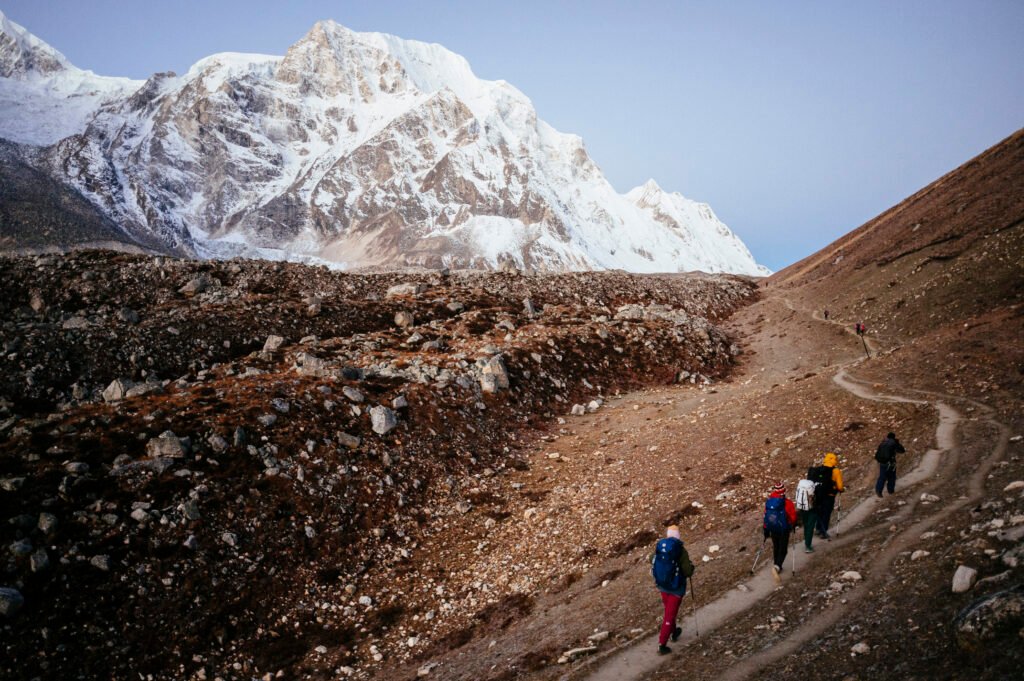
Outside the Kathmandu valley, a shoot sits inside an envelope. Getting to the location. Acclimatisation, where altitude is involved, at a pace set by the body rather than the schedule. Working. Coming out. A buffer before the international flight home. On a road-accessible shoot that envelope might be a day at each end. On a high shoot it can be longer than the shooting schedule itself, and there is no way to argue the mountain out of it.
So price from total days on the ground, for every member of the party, foreign and Nepali, including drivers, guides, liaison officers and carrying crew. Then ask which of those days are compressible. Usually the answer is that the ones involving altitude and weather are not, and those are exactly the ones producers try hardest to compress. The compression does not remove the days. It removes the margin that was protecting the shoot, and the days reappear later as overruns.
Distance from the road head is the biggest multiplier
Nepal’s cost geography reduces to two questions. How many hours from a sealed road? Then how many days on foot from the last road head? Those two answers shape a budget more than the camera package does, and they compound with each other.
On the road network, kit travels in vehicles, and vehicles are cheap relative to people. Past the road head, every case becomes a load and every load becomes a person. That person needs a wage, food, shelter, footwear and clothing suitable for the altitude they will reach, insurance, and a plan for getting down if they become ill. Kit weight converts into headcount. Headcount converts into days, because a loaded party moves at the pace of its heaviest carry, and loads are slower higher up and in cold.
This is why cutting the kit list is a budgeting decision rather than a technical one. A case you leave behind at home saves money on every single day of the trip. A case you leave at the road head saves almost nothing, because you have already paid to bring it that far and will pay to take it home. The cheap moment to remove weight is before departure, in a room with the shot list open, not on a hillside with the party already assembled.
Remoteness also removes your fallbacks. On the road you can send a vehicle back for a forgotten item or a replacement part. Two days up a trail, the answer is that you work with what you carried, or you do not get the shot. Redundancy that would be an indulgence in the city becomes basic insurance in the hills, and redundancy is more weight, which is more people, which is more days. The multiplier feeds itself.
The seven things that actually move the number
Almost every meaningful swing in a Nepal budget traces back to one of these. Everything else is detail around them.
Location remoteness
Hours from sealed road, then days on foot beyond it. This is the master multiplier, because it converts kit weight into carrying crew and carrying crew into days for the whole party.
Crew size
Every head added is a bed, a seat, a meal, an insurance line and a load to move, repeated across the full envelope. A lean crew is not just cheaper on wages, it is cheaper on everything that scales with headcount.
Transport mode
Vehicle, fixed-wing mountain flight or helicopter. The choice changes the shape of the budget and its risk profile, not just the total, and the cheapest option on paper is often the most exposed.
Season
The window you choose decides what you are competing against for aircraft, guides, carrying crew, beds and seats, and therefore what everything costs and how far ahead it must be booked.
Permits
Category matters more than count. What you are making and where you point the camera decide which overlapping regimes apply, and some carry a mandatory liaison officer who is a crew line in disguise.
Equipment weight
Case count and total kilograms, not the value of the kit. Weight is the number that becomes people beyond the road, and the border treats professional gear as counted in and expected out.
Aircraft change the shape of the budget, not just the total
Two kinds of aircraft show up in Nepal budgets and they fail in different directions. Understanding how each one fails is more useful than knowing what either one costs.
Scheduled fixed-wing services into short mountain strips are relatively cheap per seat and expensive in risk. Baggage allowances on small aircraft are low, excess is charged by weight, and flights are grounded by cloud with little notice. The cost of a cancellation is rarely the fare. It is the whole party sitting on full daily cost while the operator works through a backlog, and moving a group plus freight onto later flights takes longer than moving individuals, because seats are scarce when the weather clears in a busy season. A crew of one can slip onto the next available seat. A crew of eight with fifteen cases cannot, and each grounded day pushes the backlog further ahead of them.
Helicopter charter buys timing and removes walking days, which occasionally makes it the cheaper structure for a large party on a short schedule. It is charged against flying time, and that clock generally includes the empty positioning legs, so a machine that must come to you costs more than the leg you actually fly. Payload falls as landing elevation rises. Crew and kit you assumed would go in one lift may need two, and finding that out on the day is expensive, because the second rotation is more flying time and more positioning. Confirm payload against the real landing site, at its real elevation, before the schedule is built on it.
The deeper point is that aircraft convert a schedule risk into a financial one and back again, unpredictably. A walking party is slow but certain. An aircraft party is fast when it flies and completely stalled when it does not. Neither is wrong. But they are different bets, and a budget should say which bet it is making and where the money is if that bet loses.
Fixed-wing or helicopter: the same trip, two different risks
Producers often ask which is cheaper, as though it were one question. It is really two. A scheduled mountain flight is cheap per seat and pays its cost in exposure to weather and backlog. A charter is expensive per hour and buys back time and certainty of movement, within the hard limit of payload at altitude. Neither removes the weather. They move where the risk sits. On a long schedule for a small party, walking or scheduled flights usually win. On a short schedule for a large party, a charter can be cheaper overall because it deletes several days of everyone’s cost at both ends. The right answer falls out of party size, kit weight, schedule length and landing elevation, not out of a preference.
Crew size is a multiplier, not an addition
It is tempting to think of crew as a list of wages, where adding one more person adds one more line. In Nepal, and especially away from the road, an added head is a multiplier. That person needs a seat on every transfer, a bed in every lodge, a share of every meal, a place in every vehicle and, beyond the road head, their loads carried by someone else who also needs all of the above. A single extra role can ripple into extra porterage, an extra room that a small lodge may not have, and in a tight aircraft, an extra rotation.
This is why the honest lean crew is one of the strongest cost controls available on a Nepal shoot, and why it is worth deciding early who genuinely has to be on the ground and who can work from a supported position lower down or from home. It is also why multi-skilled crew earn their place twice over. A person who can shoot and also manage sound, or direct and also handle stills, does not just save a wage. They save everything that wage would have dragged behind it across the whole envelope.
There is a floor, though, and it is a welfare floor rather than a budget one. Understaffing the carry to save money does not save money. It transfers cost onto the people doing the carrying in the form of loads that are too heavy, and it slows the whole party, which adds days for everyone. A crew that is lean on principals and properly staffed on support is the shape you are aiming for. Lean where lean is safe, resourced where resource is a duty of care.
Permit category matters more than permit count
Nepal does not have a single filming permit. It has several regimes that overlap, and which ones apply is driven by what you say you are making and where you intend to point the camera. Counting permits tells you very little. Knowing your category tells you almost everything about the paperwork, the lead time and the people who must travel with you.
The shapes worth knowing. National filming permission handled at ministry level. Separate entry and filming permissions for national parks and conservation areas, administered by the bodies that manage them. Restricted area permissions for certain upper valleys and border regions, which typically require a registered local agency and a government liaison officer travelling with the party. Heritage and religious site permissions handled by the trust or department that runs that specific site rather than by central government. Municipal or local permission for street work. And a separate chain for flying a drone, involving aviation authorities, home affairs and the local district administration, with outright prohibitions in some parks and around some sites.
Category drives everything downstream. News, documentary, corporate, commercial and drama are not treated as one thing, and declaring the wrong category is a worse problem than declaring an expensive one, because a miscategorised shoot can be stopped rather than merely charged. Where a liaison officer is required, that person’s travel, food, accommodation, kit and insurance sit on the production and belong in the budget as a crew line, not as an afterthought discovered in the field.
Forms, fees and lead times change. Treat the description above as the shape of the system, not as the current position, and confirm what applies to your dates, your locations and your category before you commit money to a schedule that assumes access you do not yet have.
The vocabulary a Nepal budget uses
These are the terms that recur when a shoot is priced honestly. Knowing them lets you read a quote and spot what a vague one has left out.
Days on cost
The total days each person is being paid, fed, housed, insured and moved, whether or not a camera turns. This, not the shooting-day count, is the real driver of a Nepal budget.
The envelope
The full arc of a location shoot: travel in, acclimatisation, working days, travel out and buffer before the flight home. Everyone is on cost for the whole envelope, not just the working part.
Road head
The point where the sealed or drivable road ends and everything must continue on foot or by air. It is the single most important line on a Nepal cost map.
Positioning legs
The empty flights a chartered helicopter makes to reach you and return to base. Charter time is normally billed to include them, so the machine coming to you costs more than the leg you fly.
Payload
The weight an aircraft can lift on a given day. For helicopters it falls as landing elevation rises, which can quietly turn one planned lift into two.
Liaison officer
A government officer required to travel with the party in certain restricted areas. Their full costs sit on the production and belong in the budget as a crew line.
Carrying crew
The people who move kit and supplies beyond the road head. They are crew, with wages, insurance, clothing, footwear, food and shelter, not a freight rate per kilogram.
Contingency
Deliberately unspent time and money held against weather, aircraft delays and the things that go wrong at altitude. On an exposed shoot it is not padding, it is the plan working as designed.
How to build a Nepal budget that survives contact
Work in this order. Each step depends on the answer to the one before it, and skipping the early ones is why late budgets fall apart.
Describe what you are making, in permit terms
Start from the category, because it decides which permission regimes apply and whether a liaison officer must travel with you. A budget built before the category is settled is built on sand.
Name the locations, not the regions
Two valleys an hour apart can sit under different rules. Pin down actual locations so remoteness, permits and transport can be checked one by one rather than assumed for a whole area.
Measure remoteness honestly
For each location, establish hours from sealed road and days on foot beyond it. This converts directly into carrying crew, days and therefore the largest part of the cost.
Cut the kit list on paper
Decide the case count and total weight before departure, with the shot list open. Every kilogram removed here saves money on every day that follows, not just once.
Choose the transport bet and price its failure
Vehicle, scheduled flight or charter. Whichever you pick, write down what happens to the money if weather grounds you, and hold contingency against it at both ends.
Cost the whole envelope per head
Add travel, acclimatisation, working and buffer days for every person, foreign and Nepali. Then confirm the whole plan against current rules before locking dates or flights.
The same three shooting days, two very different envelopes
This compares structure, not price. It shows why a shooting-day count is a misleading way to compare two Nepal shoots.
| Cost factor | Road-accessible valley shoot | High remote mountain shoot |
|---|---|---|
| Days on cost per person | Roughly the shooting days plus a short buffer | Well beyond the shooting days once travel and acclimatisation are counted |
| Kit movement | Vehicles carry it, returns to a room each night | Every case becomes a carried load and a headcount |
| Cost of one lost day | One day, work moves indoors or to another location | Several days, it can move your slot on the flight out |
| Fallback for a failure | Send a vehicle back, replace a part that afternoon | Work with what you carried, or lose the shot |
| Weather exposure | Low, reschedule within the same trip | High, aircraft and passes can close for days |
| Contingency needed | Modest float at the end | Real buffer at both ends, agreed in writing |
Season, and what you are bidding against
Nepal’s usable windows are narrow and contested. The clear weeks after the monsoon and the settled stretch in spring are when trekking groups, expeditions, other crews and tourists all want the same finite pool: helicopters, experienced guides, strong carrying crew, lodge beds and seats on the mountain flights. Availability and price behave accordingly, and booking lead times stretch. In the best weeks you are not really negotiating a rate, you are competing for a scarce resource that a dozen other parties also want, and the ones who booked earliest win.
Outside those windows you gain availability and lose other things. The monsoon brings cloud that closes the mountains for days at a time, landslides that shut hill roads, and leeches on the trails. Deep winter closes high passes, shuts high lodges, and sends the people who run them down valley, so the support you were counting on may simply not be there. The main autumn festival period moves a large share of the workforce home and slows government offices, which matters a great deal if your permissions are still in progress when it arrives.
The trap is assuming the quiet season is the cheap season. It is only cheaper if you still get the shot. A monsoon booking at a lower rate that loses four days to cloud is more expensive than a peak booking that delivers, once you count the days on cost that bought you nothing. Season is not a discount lever. It is a decision about what you are willing to compete for and what you are willing to risk.
Season by season, what a budget is really buying
A rough guide to the pressures each window puts on a shoot. It describes trade-offs, not prices.
| Window | What you gain | What it costs you | Watch for |
|---|---|---|---|
| Post-monsoon autumn | The clearest skies and most reliable mountain flying | Peak competition for aircraft, guides, beds and seats | Book far ahead; the festival period can slow offices mid-window |
| Spring | Settled weather and a long working stretch | High demand again, plus haze building later in the season | Afternoon cloud and dust reducing long views as it warms |
| Monsoon summer | Availability, green landscapes, fewer other crews | Cloud closing the mountains, landslides on hill roads, leeches | Days lost to weather can erase any saving on rates |
| Winter | Quiet trails and sharp clear light at lower elevations | High passes and lodges closing, cold adding to carrying limits | Support thinning out high up as staff move down valley |
Nothing on this page is a guarantee
This page explains how costs behave, not what they are. Prices, permit fees, rules, aircraft availability and weather all change, and none of them can be promised by anyone. Nothing here is a quote, and nothing here guarantees access, flights, safety or that a permission will be granted. We confirm the realistic position for your specific shoot, on your dates, before you commit money.
Why three days in Kathmandu and three days at Everest are not the same number
A producer comparing two quotes for three shooting days is not comparing two versions of one thing. They are comparing two different structures that happen to share a label.
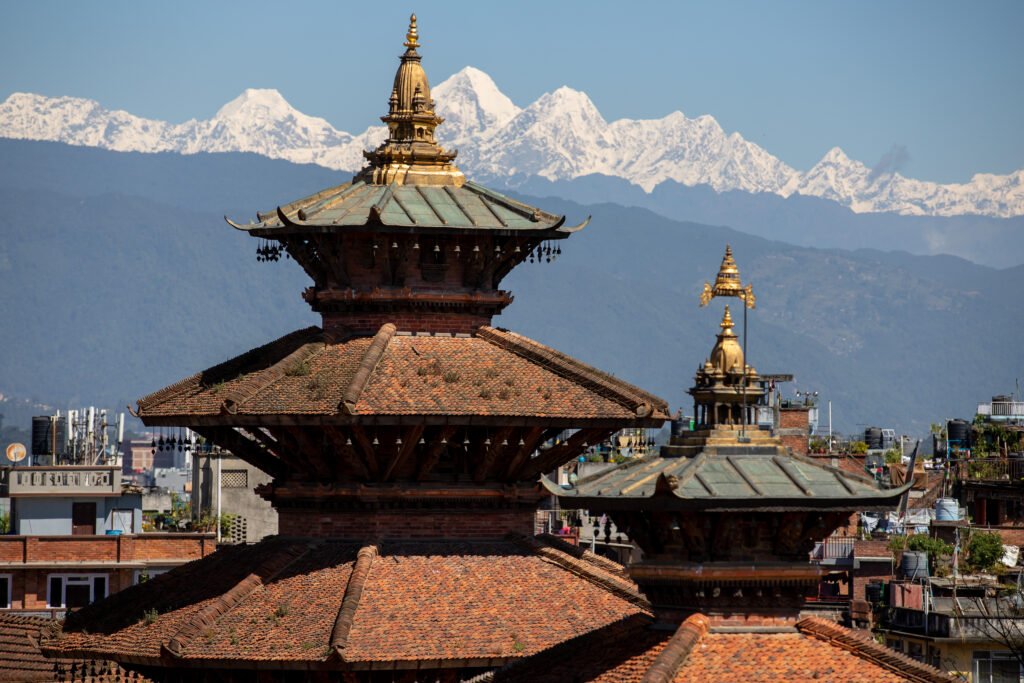
In Kathmandu, a shooting day is a shooting day. The crew sleep in one place, vehicles return each night, kit comes back to a room, and a forgotten cable can be replaced that afternoon. An extra day costs an extra day. Bad weather moves you indoors or to another location on the same list. The valley is not automatically simple, because heritage and religious sites are managed by the bodies that run them and permission there can be slow and conditional, but the cost structure is legible and the fallbacks are real.
Three shooting days in the Everest region sit inside an envelope of flying in, walking up over several days at a pace governed by acclimatisation, working, walking down and flying out, with buffer at both ends. Everyone in the party, including the carrying crew, is on cost for that whole envelope. An extra day at the top does not cost one day. It can cost several, because it moves your slot on the flight out and pushes everything behind it. A forgotten cable is not replaceable at any price.
The two numbers are not comparable because the units are not the same. One is priced in days that behave like days. The other is priced in an envelope that behaves like a chain, where pulling one link drags the rest. Compare envelopes, not shooting days, and a quote that looked expensive at first glance often turns out to be the honest one.
Where Nepal budgets actually break
Four failures account for most of the damage, and all four are avoidable at the planning stage for far less than they cost in the field.
No weather contingency. The schedule carries no float and the flight home is booked for the day after wrap. One grounded aircraft becomes a missed connection, a rebooking for the whole party, and sometimes a sequence that never gets filmed. Buffer belongs at both ends, not only at the end, because delays at the start eat the shoot from the front.
A kit list that was never cut. Every case decided at home is multiplied across every carrying day, every excess baggage charge and every extra lift. Kit lists get cut in the end. Cutting them late, on a hillside, with the party already paid to assemble, is the expensive way to do it.
Road time estimated from a map. Kilometres tell you very little about hill roads. A transfer that looks short becomes a full production day once you add load-in, load-out, road surface, single-lane sections, and the fact that you cannot make up time after dark. Every underestimated transfer quietly deletes a shooting day you have already paid for.
Porterage priced as freight. Treating carrying crew as a rate per kilogram is a welfare failure and a budgeting error at the same time. Loads have limits, those limits are lower at altitude and in cold, and carrying crew need proper clothing, footwear, shelter, food and insurance. Slower loads add days for the entire party. If the porterage line on a quote reads like a shipping tariff, either the party is understaffed or the real cost has been pushed onto the people doing the carrying, and one way or another it will come back.
Price the whole envelope, not the shooting days. The mountain charges you for every day it holds you, whether or not the camera turns.
How we workEquipment, weight and the border
Bringing all your own kit feels like the safe, controlled choice, and for the core camera package it usually is. Camera bodies and the lenses you trust generally travel with you. But treating the whole equipment list as something to import wholesale is often the wrong economy, because in Nepal weight is not a one-off cost. It is a cost that repeats on every day and every leg.
Start at the border. Professional equipment entering Nepal is counted in and expected out. Nepal has not historically operated the ATA Carnet system, so temporary import normally runs on a detailed manifest secured by a deposit or bank guarantee against re-export, rather than on a carnet, and that paperwork is a real workstream with a real lead time. Confirm the current handling with a clearing agent who has cleared into Nepal specifically before anything flies, because getting this wrong stalls a shoot at the airport on full daily cost.
Beyond the border, every case you brought is a load or an excess baggage line for the rest of the trip. Grip, support, lighting and consumables are the categories worth pricing against local hire, because they are heavy, they are often available in Kathmandu, and removing their weight saves money on every carrying day rather than once. The question is not whether your own kit is better. It usually is. The question is whether owning that quality for the whole envelope is worth what its weight costs across every day and every lift, and sometimes the honest answer is to carry the irreplaceable and hire the heavy.
Where the money goes across a project
Spending on a Nepal shoot is not evenly spread. Knowing when it lands helps you protect the parts that cannot be recovered.
- Well before the shoot
Decisions that set the ceiling
Category, locations, crew size and kit weight are chosen here. Almost nothing you decide later moves the budget as much as these do, and they cost nothing but attention to get right.
- Pre-production
Permits, bookings and lead times
Permissions go in, aircraft and beds are held, and the manifest for kit is prepared. In contested seasons this is where booking early buys availability that money alone cannot buy later.
- Getting there
The travel envelope begins
From the first transfer, the whole party is on cost. Underestimated road time and low baggage allowances start biting here, before a single frame is shot.
- On the ground
Days, weather and the things that move
This is where contingency earns its place. Weather days, extra lifts and slower carries all draw down the buffer you set aside, or overrun the budget if you set none.
- Coming out and after
Exit, re-export and reconciliation
The buffer before the flight home protects your connections. Kit must clear out against the manifest, and the final number is compared to the plan, usually confirming that the early decisions were the ones that mattered.
Decide who carries the weather risk, in writing, before you leave
The single cheapest thing you can do for a Nepal budget is agree, before departure, what a lost day costs and who absorbs it. That conversation is straightforward on email weeks ahead and painful on a hillside with a grounded aircraft and a party on full daily cost. Put it in writing while it is still cheap to have.
What a quote needs before it can exist
Anyone who gives you a firm all-in price before reading a treatment is guessing, and the guess gets resolved later, usually not in your favour. This is not evasion. It is that the variables which move the number most all live in the treatment, and until those are known there is no number to give, only a hopeful one that will have to change.
To price a Nepal shoot honestly, a producer or fixer needs the shape of the thing. What it is and who it is for, because category drives which permit regimes apply. Named locations rather than regions, because two valleys an hour apart can sit under different rules and different remoteness. A crew list with roles and nationalities, because both permissions and domestic airfares distinguish by nationality. A kit list with case count and weights, because that is the number that becomes people. Dates, because season sets both availability and competition. Whether aerials, protected site interiors, night work or contributor fees are involved. And, importantly, which parts of the schedule are fixed and which can move when the weather does, because a plan that can flex is a cheaper plan to insure against.
Give a fixer that and you can get a budget you can defend to a commissioner, one where each line traces back to a real driver rather than a round number. Give them a one-line brief and you will get a number that has to change, and every change after the money is committed is harder and more expensive than the honest conversation would have been at the start. The quote is only as good as the brief it was built on.
Questions
Is it cheaper to film in Kathmandu than in the mountains?
Structurally, yes, and the reason is days rather than rates. In the valley the crew sleep in one place, vehicles carry the kit, and an extra day costs an extra day. That said, a Kathmandu shoot is not automatically simple. Heritage and religious sites are managed by the bodies that run those specific sites, and permission there can be slower and more conditional than a straightforward shoot in open country. The useful comparison is days on cost and access conditions, not a rate card.
Should I budget for a helicopter or plan to walk in?
It depends on party size, kit weight, schedule length and the elevation of the landing site. For a small crew with a long schedule, walking is usually the cheaper structure. For a large party with a short schedule, a charter can be cheaper overall because it removes several days of everyone’s costs at both ends. Two things catch producers out: charter time normally includes the empty positioning legs, and payload drops as landing elevation rises, so what you assumed was one lift may be two. Confirm payload against the actual landing site before you build a schedule on it.
How many weather contingency days should I carry?
No honest answer is a single number, and nobody can promise you weather. Scale the buffer to how exposed the plan is. A road-accessible shoot in a settled season needs less float than one that depends on a mountain flight, a high camp, or a single event that happens once. Two practical steps: put buffer at both ends rather than only at the end, and agree in writing, before departure, what a lost day costs and who carries it. That conversation is cheaper before the trip than during it.
What should I do about crew insurance and altitude?
Take your own medical and insurance advice, from people qualified to give it, for the specific altitudes and activities in your plan. Two things are worth raising with your broker. Many policies carry altitude ceilings, and many distinguish leisure trekking from working at altitude, which is what your crew will be doing. Helicopter evacuation cover is usually a separate question again. Do not assume that locally engaged crew and carrying crew are covered by your policy, and do not assume they are covered at all unless someone has checked. Nothing about altitude health, medical care or evacuation can be promised by anyone.
Does bringing all my own kit save money?
Not always. Professional equipment entering Nepal is counted in and expected out. Nepal has not historically operated the ATA Carnet system, so temporary import normally runs on a detailed manifest secured by a deposit or bank guarantee against re-export rather than on a carnet, and that paperwork is a real workstream with a real lead time. Confirm the current handling with a clearing agent who has cleared into Nepal specifically before anything flies. Beyond the border, every case you brought is a load or an excess baggage line for the rest of the trip. Camera bodies and lenses generally travel with you. Grip, support, lighting and consumables are worth pricing against local hire, because removing weight saves money on every day rather than once.
Why will a fixer not quote a firm all-in price from my first email?
Because the variables that move the number most are all in the treatment: how many days, how far from a road, whether aircraft are involved, what the kit weighs, which permit category you fall under, and how much of the schedule can move if the weather does. Anyone who quotes a firm all-in before reading that is guessing, and the guess gets resolved later, usually not in your favour. Regulations and costs also change, so a number quoted for last season is not a number for yours.
How far ahead should I book to protect the budget?
In the contested autumn and spring windows, as far ahead as you can. Aircraft, experienced guides, strong carrying crew, lodge beds and seats on mountain flights are a finite pool that trekkers, expeditions and other crews are all drawing from at the same time. Booking early is often the only way to secure availability at a sensible cost, because late in the cycle you are competing for whatever is left. Outside the peak windows there is more slack, but you are then trading availability against weather and the risk of losing days you have already paid for.
Is the low season genuinely cheaper?
Only if you still get the shot. Monsoon and deep winter offer more availability and quieter locations, but they also bring cloud that closes the mountains, hill roads cut by landslides, high passes and lodges shut, and support thinning out at altitude. A cheaper booking that loses several days to weather can end up costing more than a peak booking that delivers, once you count the days on cost that bought you nothing. Treat season as a decision about risk and access, not as a discount.
What single piece of information helps you price my shoot fastest?
Named locations, followed closely by an honest kit list with case count and weights. Locations settle remoteness, permits and transport all at once, because they decide hours from the road, days on foot, which permission regimes apply and what season conditions to expect. The kit weight is the number that converts into carrying crew and therefore into days. With those two, plus your dates and category, most of the budget’s shape falls into place, and the rest is detail.
Tell us what you are planning
A rough brief is enough to start. You will get a straight answer on whether it works, what it involves, and what we think the risk is.