Filming in the Everest & Khumbu Region, Nepal
The world’s most cinematic alpine peaks, high Sherpa monastery villages, glacial moraines, and Everest Base Camp. Coordinated with specialized high-altitude film crews and Sherpa mountain logistics.
⚡ High-altitude camera units, CAAN drone permits & Heli-Medevac on standby.
High-Altitude Visual Scale
Unrivaled Himalayan Drama on a World Scale
The Everest region offers unmatched visual grandeur. Towering 8,000-metre giants (Everest, Lhotse, Cho Oyu, and Ama Dablam) form backdrop walls found nowhere else on earth.
From the bustling mountain hub of Namche Bazaar and ancient mani stone walls to remote high-altitude monasteries like Tengboche, the visual texture combines raw geological scale with rich Sherpa cultural depth.
Every day of shooting above 3,500 metres requires rigorous operational discipline: managed battery thermals, porter and yak freight logistics, acclimatized camera crew, and guaranteed helicopter evacuation standby.
Morning camera setup overlooking Ama Dablam with mountain Sherpa unit.
Key Cinematic Frames
Iconic Filming Setups in the Everest Region
FRAME 01
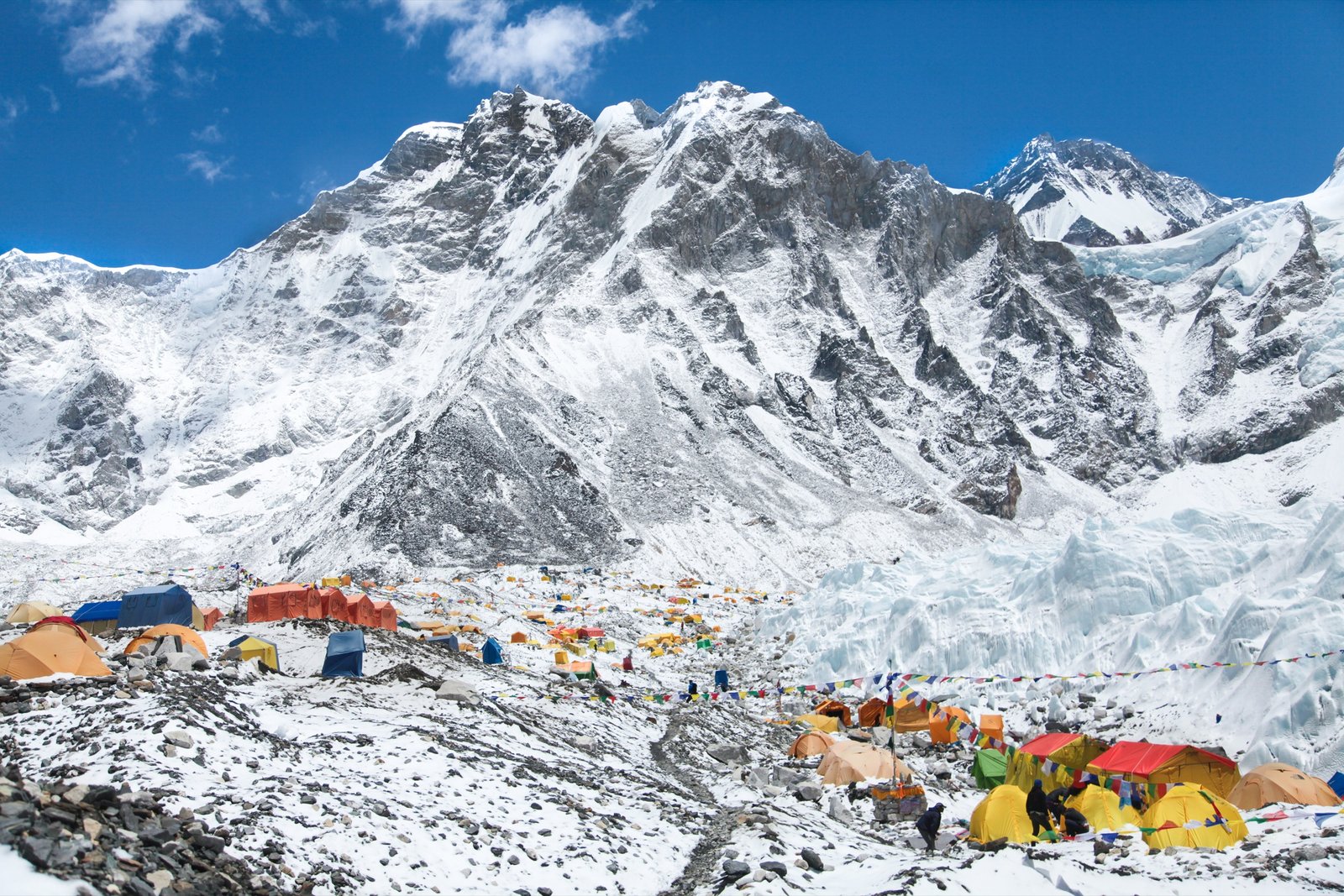
Everest Base Camp & Khumbu Icefall (5,364m)
Towering seracs, expedition tent cities, and turquoise glacial ponds under the dramatic western shoulder of Everest.
FRAME 02
Tengboche Monastery (3,867m)
Tibetan Buddhist monastery precinct framed directly against the pyramid spire of Mount Ama Dablam.
FRAME 03
Namche Bazaar Natural Amphitheatre (3,440m)
Curving horseshoe Sherpa capital built into steep stone terraces with Kongde Ri rising across the valley.
FRAME 04
Hillary Suspension Bridges & Dudh Koshi Gorge
Dramatic high-wire suspension bridges spanned with prayer flags over rushing milky glacial torrents.
FRAME 05
Kala Patthar Sunrise Viewpoint (5,550m)
The classic 360-degree panoramic summit frame showing the entire Everest South Col, Nuptse ridge, and Pumori.
FRAME 06
Gokyo Lakes & Ngozumpa Glacier (4,750m)
Pristine sapphire-blue glacial lake chain contrasting against stark gray moraines and Cho Oyu reflections.
Mountain Transport Intelligence
Moving Crew & Heavy Cine Kit into Khumbu
Flight & Air Airstrip Realities
Twin Otter and Dornier STOL flights operate early morning from Kathmandu or Ramechhap to Lukla (2,840m). Flights operate strictly under visual flight rules (VFR) and halt when cloud rolls in. Helicopter charters can fly directly to Namche, Syangboche, or Pheriche with priority gear manifests.
Road Transit & 4WD Fleets
No motorable road reaches the Khumbu region. The road terminates at Salleri / Kharikhola, leaving 2-3 days of trekking to reach Lukla. Road transit is strictly used as heavy cargo freight staging when flights are weather-delayed.
Porter, Pack Animal & Off-Road Staging
Beyond Lukla, all equipment moves on human porters, dzo (yak-cattle crossbreeds), or high-altitude yaks above 3,500m. Maximum porter pack weight is capped at 30kg per load with weather-proof pelican cases.
Transit Bottlenecks & Contingency Fixes
Lukla morning flight cancellations due to fog are common. We build 2 flexible buffer days into every Khumbu production schedule and secure priority helicopter fallback slots.
Mountain Legal Clearances
Permit Architecture for the Everest Region
National Filming Clearance (Ministry of Information)
National filming permit from the Ministry of Information & Communications (MOIC) with liaison officer assignment.
Protected Area / Conservation / Restricted Permit
Sagarmatha National Park entry and commercial filming permit issued by the Department of National Parks & Wildlife Conservation (DNPWC).
Municipality, Ward & Heritage Trust Permissions
Khumbu Pasang Lhamu Rural Municipality local filming tax and monastery committee permissions for interior shoots.
Aerial & Drone Flight Clearance (CAAN + Home Ministry)
Special Civil Aviation Authority of Nepal (CAAN) high-altitude drone permit + Home Ministry security clearance.
Lead Time & Application Advisory
Complete paperwork stack requires 10-14 working days lead time. We manage all applications, fee payments, and on-ground liaison.
Weather Windows & Lighting
When to Film: Seasonal Light & Visibility Windows
Prime Mountain Clarity
Oct–Nov: The gold standard. 95% clear blue skies, razor-sharp mountain visibility, moderate daytime temperatures.
Flora & Warm Valleys
Mar–May: Blooming rhododendron forests lower down, warmer climbing season action at Base Camp, mild afternoon cloud build-up.
Crisp Light & Snow
Dec–Feb: Ultra-clear skies and pristine snow cover, but extreme sub-zero cold (-20°C at night) and reduced daylight hours.
Lush Greenery & Cloudscapes
Jun–Sep: Heavy cloud cover obscuring peaks, persistent rain lower down, high leech activity and frequent flight cancellations.
Crew Support & Infrastructure
Lodging, Power, Field Catering & Communications
Crew Lodging & Hospitality
Heated eco-lodges in Lukla, Namche, and Deboche. Upper valley tea houses provide private twin rooms with shared dining halls. Mobile expedition camps for Base Camp shoots.
Battery Charging & Generators
Solar battery hubs with 230V inverter systems in main lodges. For high Base Camp shoots, we provide ultra-quiet Honda inverter generators with insulated battery warming bags.
Unit Catering & Water Safety
Hygienic mountain lodge meals prepared to western production hygiene standards. Purified and boiled drinking water supplied throughout.
Cellular & Starlink Satellite Comms
Everest Link Wi-Fi and Ncell/NTC 4G in major villages. For off-trail Base Camp shoots, we deploy Starlink Mini satellite kits and satellite phones.
Risk Management & Medevac
Safety Protocols, Altitude & Emergency Standby
Acclimatization & Altitude Schedules
Strict acclimatization schedule: 2 nights at Namche (3,440m) and 1 night at Pheriche/Dingboche (4,240m) before pushing higher. Mandatory daily pulse oximeter logs.
Helicopter Medevac Standby
Direct helicopter medevac agreements with Air Dynasty, Altitude Air, and Simrik Air. Evacuation from anywhere in Khumbu to Kathmandu hospitals within 90 minutes.
Emergency Medical Support
High-altitude medical kit, Gamow hyperbaric bag, supplemental oxygen cylinders, and licensed high-altitude expedition doctor on crew.
Technical Gear Intelligence
Recommended Camera & Technical Equipment Package
Weather-sealed bodies (ARRI Alexa Mini LF, RED V-Raptor, Sony FX6/FX9). Lightweight carbon-fiber tripods and compact zoom lenses for mobile trekking.
DJI Inspire 3 / Mavic 3 Pro with high-altitude propeller blades. Pre-warmed battery packs kept inside insulated inner jackets.
Rycote high-wind blimps and deadcats are mandatory due to high mountain valley updrafts and glacier wind shears.
Lithium-ion batteries lose 30-40% capacity in freezing conditions. Bring double battery allocations and USB battery heating plates.
Proven Ground Track Record
Productions Supported at This Location
International Mountaineering Documentary (BBC Earth)
Alpine Apparel Commercial (Global Outdoor Brand)
Environmental Science Feature (National Geographic)
Everest Filming Logistics FAQs
Producers’ Practical Guide to Filming in Khumbu
Can we fly drones at Everest Base Camp (5,364m)?
Yes, with CAAN high-altitude drone clearance, Home Ministry approval, and Sagarmatha National Park permits. High-altitude propellers and cold battery pre-heating are mandatory.
How do we get heavy 400kg camera equipment to Namche or Base Camp?
Heavy gear is flown by cargo helicopter directly to Syangboche or Pheriche, then transferred to local yak/porter teams for the final approaches.
How many days are required to acclimatize safely before filming?
A standard schedule requires 4 to 6 days of gradual ascent from Lukla to reach 4,000m comfortably without altitude sickness risking production time.
What happens if a crew member gets Acute Mountain Sickness (AMS)?
Our high-altitude safety director evaluates vitals immediately. If descent is required, emergency helicopter evacuation to Kathmandu is arranged within 1-2 hours.
Is there high-speed internet to upload daily proxy files from the mountain?
Yes. We deploy mobile Starlink satellite units providing 100-200 Mbps speeds for direct daily proxy uploads to overseas edit suites.
Can we hire local Sherpa camera assistants and sound recordists?
Yes. We supply experienced English-speaking Sherpa camera assistants and mountain safety guides trained in high-altitude cine production.
Planning an Everest & Khumbu Production?
Tell us your dates, altitude targets, and camera package. We will provide a full mountain logistics breakdown, permit schedule, and budget within 24 hours.
Direct Khumbu mountain production team. Certified high-altitude safety directors & licensed Sherpa crew.