
Who does the work on the ground
The team in Nepal
A shoot in Nepal is not run by a logo. It is run by a small number of people who know the roads, the offices, the weather and the mountains, and who make decisions in real time when the plan meets the day. This page is about how those people are organised, what each role actually does, and how a team is assembled to fit your production rather than the other way round.
We are deliberately not going to introduce you here to named individuals with invented histories. The people are real, and their profiles are being prepared and approved properly, one at a time. What we can do now, honestly, is show you the shape of the team: the function of every role on a Nepal shoot, how those roles are matched to the size and altitude of your job, how the parent company sits behind the work, and the standards the whole team will and will not work under.
Read it as a map of who does what. When you enquire, you will be told the name of the person who owns your production, before you commit to anything.
Meet the Team Supporting Your Production
 Digbijaya BharatiFounder & Managing Director
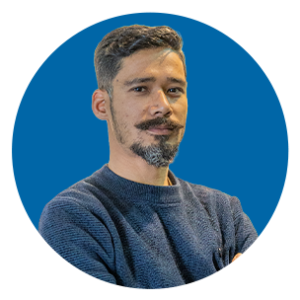 Shree Ganesh PradhanCEO & Executive Partner
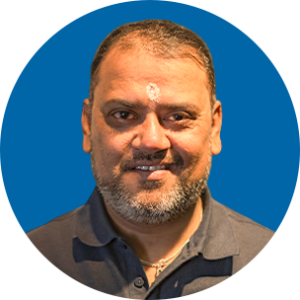 Laxman Raj PoudelProfessional Fixer & Production Manager
 Dheeraj AdhikariPost-Production Lead — Editor, Colorist, Sound Designer
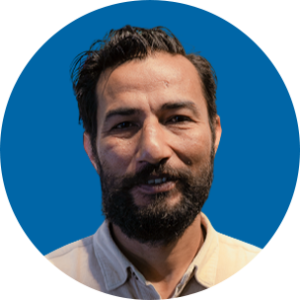 Bibek KhadkaDirector of Photography
 Bijesh MaharjanDirector of Photography, Photographer, DIT
 Radhashyam DulalCinematographer, Drone Operator
 Pujan PuriDirector of Photography, AC/Focus Puller, DIT
 Saphal GanejooCinematographer, Gaffer, Camera Operator
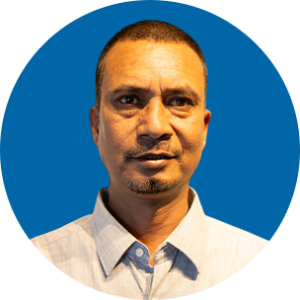 Suraj AcharyaGaffer, Lighting Technician
 Agrani JhaProduction Designer, Art Director, Storyboard Artist
 Ayden BaralFilmmaker, Director, Editor, Subtitles Specialist
 Raj KumarSenior Animator, Character Developer
 Aaditya ShresthaProduction Assistant
 Binaya SharmaSEO & Social Media Specialist
A few fixed points
General facts that shape how a team in Nepal has to be built. None of these is a company statistic.
How a production is staffed here
One named person owns your production from the first brief to the moment your equipment leaves the country. That is the whole point of a fixer, and splitting the responsibility across a rota of interchangeable staff is exactly how details fall down the gap between people. When one person carries the thread, they remember that the permit for the second location depends on a letter that has not come back yet, that the pilot flagged a weather window closing on the fourth day, and that your presenter is not acclimatised for the altitude in the original schedule. That memory is the job.
Around that one person sit the specialists. A production manager runs the day to day. A coordinator handles permits and the paperwork that comes with them. Crew are brought in for what the shoot actually needs, and no more. A three person stills shoot in the Kathmandu Valley and a twenty person series in the Khumbu are staffed in completely different ways, and there is no standing crew sitting idle waiting for either of them. That is not a weakness to hide. It is the correct way to run production support in a country where the right camera operator for a temple interior and the right one for a ridge at altitude are often not the same person.
You will be told who is on your production before you commit, not after. If a role is going to be filled by someone you have not been introduced to, you will know that too. The team is small enough that this is a promise we can actually keep, rather than a line on a page.
Why one person owns the job
There is a real difference between a company where the person who answers your first email is the person standing at the checkpoint with your paperwork, and one where enquiries are handled by an office that will never be on your shoot. Neither is wrong in principle, but you should know which one you are dealing with, because it changes what happens when something goes sideways at five in the morning.
When a single lead owns the production, the chain of decisions is short. If a road is blocked by a landslide, the person who rerouted you already knows which lodge can take the crew a day early, which driver will do the longer run, and whether the new road passes a checkpoint that will ask about your kit. They are not relaying that to a coordinator who relays it to a manager. They decide, and they tell you what they decided and why.
That ownership cuts the other way as well. A lead who owns the job also owns the honest conversation you need at brief stage: that your schedule has no slack, that the season is wrong for the shot you have described, that the location you have set your heart on will not grant access to a crew of your size, or that the altitude in your plan is a health risk for the pace you want. Distributing a production across many hands makes it very easy for nobody to be the person who says that. Concentrating it makes it hard to avoid. We think that is a feature.
The roles on a Nepal shoot
These are functions, not people. On a small shoot several of them are held by one person. On a large one they are separate. What matters is that every function is covered and that you know who is covering it.
Lead fixer
Holds the whole ground operation: permit strategy, location access and the negotiations that are not paperwork, crew and vehicle booking, the schedule, and the decisions made when the plan meets the weather. Also the person who tells you what will not work.
Production manager
Runs the days rather than the strategy: movements, call times, accommodation, kit and the constant conversation with drivers, pilots, lodges and local officials that keeps a schedule intact once it is moving.
Permit and paperwork coordinator
Prepares and files applications, tracks them, answers the questions that come back, and tells you honestly where the schedule has no room. Cannot promise an outcome, because that decision belongs to a government office.
Local crew
Camera, sound, lighting, grip, and data handling, brought in for the specific shoot. Most are people the team has worked with repeatedly, which matters far more than a roster: reliability at altitude is knowledge earned on the mountain, not on paper.
Guides, porters and high-altitude support
The people who make a mountain shoot possible and safe: route knowledge, load carrying within proper limits, pacing for acclimatisation, and the local judgement about when a plan has become a bad idea.
Drivers, interpreters and community liaison
Drivers who know the hill roads in the dark, interpreters who work across more than one language and register, and the liaison who arranges respectful access with the communities and sites you want to film.
What the lead fixer does
The lead fixer holds the strategy for the whole ground operation. That starts with the permit approach: working out which permissions your shoot actually needs, in which order, and how much time to leave, then either preparing them or handing that to a coordinator while keeping ownership of the plan. It runs through location access, which is only partly paperwork. A great deal of access in Nepal is a relationship: knowing who to ask at a monastery, how to approach a village, which office holds the real decision for a given site, and how to arrange something without treading on a community that has every right to say no.
The lead also books crew and vehicles, builds the schedule, and then defends that schedule against the things that attack it: weather, roads, flight cancellations, a permit that comes back slower than hoped. When the plan meets reality, they are the person who decides what moves and what holds, and who tells you in plain terms what the change costs you in time, money and risk.
Most of all, the lead fixer is the person who tells you the truth early. That the shot you want needs a season you have not booked. That the number of people you are bringing will not fit the access you can get. That a location is genuinely the wrong choice. That honesty is the part of the job that earns its keep, and it belongs at brief stage, on a call, long before anyone is standing on a hillside discovering it the hard way.
What the production manager does
Where the fixer holds the strategy, the production manager holds the days. Movements, call times, where the crew sleeps, how the kit gets from A to B, and the running conversation with drivers, pilots, lodge owners and local officials that keeps a schedule intact once it is actually moving. It is a role of a hundred small confirmations, each of which is invisible when it works and very visible when it does not.
On a Nepal shoot the production manager is the person who has already phoned ahead to check the road is open, who knows that the domestic flight to a mountain airstrip goes in the morning or not at all, who has confirmed that the lodge can feed a crew of your size and has power for charging, and who is quietly holding a fallback for each of those things. They manage the load limits that decide what kit can realistically go up a trail, and they keep the porters, drivers and support crew informed and treated properly, because a schedule held together by goodwill collapses the moment the goodwill runs out.
On smaller shoots the fixer and the production manager are the same person, and that is efficient rather than a compromise. On a longer or larger production they are separate, because no single person can hold both the forward strategy and the minute by minute execution of a big crew across difficult ground. You should know which arrangement you are getting, and why, before the shoot rather than during it.
What the permit coordinator does
Permit work is its own discipline and it does not forgive guesswork. It is sequential, it involves several unrelated authorities that do not talk to each other, and the paperwork does not transfer neatly between categories. Getting the category right at the very start is most of the job, because a strong application in the wrong category is still the wrong application, and unwinding it costs the one thing a shoot never has spare, which is time.
A permit coordinator scopes what your shoot needs, prepares and files the applications, tracks them through the offices, answers the follow up questions that come back, and keeps you informed about where your schedule has slack and where it has none. They know what a good application looks like from the reviewing side: complete, consistent, honest about what you intend to film and where, and accompanied by the supporting documents that stop an application sitting in a tray. Detailed permit process guidance lives on our permit pages, and this is deliberately only a summary of the role.
What a coordinator cannot do, and will never claim to do, is guarantee you an outcome or a date. The decision to grant a permission belongs to a government office, and processing times vary by category, season and location. Anyone who promises you a fixed permit timeline is either guessing or selling. The coordinator’s honesty about that uncertainty is worth more to your planning than a confident number that turns out to be wrong.
How a team is built for your shoot
There is no standing crew waiting to be deployed. Every production is staffed from the brief up, in roughly this order.
Read the brief properly
Before anyone is named, we work out what the shoot really is: what you are filming, where, in which season, with how many people and how much kit, and what the shot list quietly demands of the terrain and the light. Most staffing mistakes are made here, by not asking enough at the start.
Match roles to the actual shoot
We decide which functions your production needs and which it does not. A small Valley shoot may need one person wearing three hats. A high-altitude series needs separate strategy, day management, permits and mountain support. We staff to the job, not to a template.
Name your lead
One person is made owner of the production and introduced to you before you commit. From that point they are your single point of contact and the holder of the whole plan, and you know who to call when something changes.
Bring in the specialists you need
Camera, sound, lighting, grip, drone, interpreting and high-altitude crew are drawn in for the specific shoot, chosen for fit rather than availability. Where a specialism is not held in-house, we say so and source it rather than pretend it is.
Confirm terms before anyone commits
Every person on the production, including porters and support crew, has terms agreed before they walk: what the work is, what it pays, what the load limits are, and what the conditions are. Nothing is left to be sorted out on the day.
Operated by Nepal Film Production
Hire Fixer in Nepal is the fixing and on-ground production arm of Nepal Film Production Pvt. Ltd., based in Kathmandu. The parent company gives the team the things a good fixer needs behind them: an established base in the capital, an existing network across offices, locations and crew, and a sister service focused on private film-permit support. When your shoot needs permit-heavy work, the two sides talk to each other rather than starting from scratch.
That relationship also shapes how we describe ourselves. The company supports, coordinates, arranges, handles and fixes. It does not produce other people’s films, and you will never see it claim to have. Role-safe wording is not modesty. It is an accurate description of what a fixer is: the people who make it possible for you to make your film, on your terms, with the credit belonging to you.
Crew and specialists, brought in per production
Camera, sound, lighting, grip, drone operation, data handling, interpreting and high-altitude support are engaged for the production in front of us. Most of the people the team calls on are people it has worked with before, repeatedly, and that history is the point. A website roster tells you a name. Having stood on a ridge at four thousand metres with a particular operator and watched them keep a camera working in the cold, or having relied on a specific interpreter to handle a sensitive conversation with a family before filming in their home, tells you something a roster never can.
Specialist fit matters more than headcount. The right drone operator for a permitted aerial over a river gorge is chosen for that job, with the technical judgement to fly it safely and the discipline to stay inside what the permission allows. The right sound recordist for a monastery interior is a different consideration again. Building the crew around the actual shot list is how you avoid the two classic failures: a crew too big and heavy to move through difficult terrain, and a crew missing the one skill the shoot quietly depended on.
Where a specialism is genuinely not held within reach, the honest answer is to say so and source it openly, or to tell you it is not realistic, rather than to pretend a capability exists and discover the gap on location. That plain accounting of what the team can and cannot bring is part of what you are hiring.
How staffing scales with the shoot
An illustration, not a fixed menu. The point is that the shape of the team follows the shape of the job.
| Type of shoot | Who leads | Who is added | What the terrain demands |
|---|---|---|---|
| Small stills or solo documentary in the Valley | One person as fixer and manager combined | A driver, an interpreter as needed, occasional local assist | Access and etiquette at sites, not altitude |
| Mid-size documentary in the hills | Fixer plus a production manager | Camera or sound support, drivers, interpreter, local liaison | Road time, weather windows, lodging and power off the grid |
| Broadcast series or high-altitude expedition | Fixer, production manager and a permit coordinator | Full technical crew, guides, porters and high-altitude support | Acclimatisation pacing, load limits, flight reliability, safety |
| Commercial with heavy kit | Fixer plus production manager, coordinator for permits | Grip and lighting crew, transport for kit, customs handling upstream | Moving weight through checkpoints, tight schedules, contingencies |
How local knowledge is actually applied
Local knowledge is a phrase every fixer uses and few explain. In practice it is a set of very specific, very unglamorous things that decide whether a day works. It is knowing that a particular office closes early on a festival you did not have in your calendar, and that the festival will also close the road you planned to move on. It is knowing which lodge on a trekking route has power reliable enough to charge camera batteries overnight, and which one says it does. It is knowing that a monastery will welcome a small, respectful crew and refuse a large intrusive one, and knowing the difference in how you ask.
It is also knowledge about people. Which driver stays calm on a bad road at night. Which interpreter can carry a difficult conversation without flattening its meaning. How to approach a family for consent to film in their home in a way that leaves them genuinely free to say no. This is why interpreters and community liaison are treated as real roles here rather than conveniences, in a country where more than a hundred languages are spoken and the register you use matters as much as the words.
Applied well, local knowledge is mostly invisible. You experience it as a shoot where the obstacles you feared never quite arrive, because someone saw them coming and quietly moved the plan around them. When it is missing, you experience it as a series of small, expensive surprises. The team’s job is to spend its knowledge so that yours becomes a smooth week of filming rather than a lesson in how Nepal works.
About the people on this page
We describe roles here, not named individuals, on purpose. The people are real, but each person’s profile, photograph and the specific claims made about their experience are being prepared and approved one at a time before they go public. We would rather show you an honest map of the team now than publish biographies we have not yet stood behind. When you enquire, you will be given the name of the person who will own your production.
The roles in plain terms
A short glossary, because the same words mean slightly different things in different production cultures.
Fixer
The person who makes a shoot possible in a place they know and you do not: access, permissions, crew, logistics and local judgement. In Nepal the fixer often leads the whole ground operation.
Production manager
The person who runs the day to day of a shoot on the ground: movements, call times, accommodation, kit and the constant coordination that keeps a moving schedule from falling apart.
Permit coordinator
The specialist who scopes, prepares, files and tracks the permissions a shoot needs, and who tells you honestly where your schedule has no slack. They coordinate the process; they do not grant the permit.
Line production
The financial and organisational management of a production locally: budgeting, hiring, scheduling and accountability. A fixer may carry line-production functions on smaller jobs.
Recce
A reconnaissance visit to a location before the shoot, to confirm access, light, logistics and the realities that a map cannot show. Time spent on a recce is time saved on the day.
Local crew
Camera, sound, lighting, grip and data-handling professionals engaged for the specific shoot, chosen for fit with the job and the terrain rather than for being on a standing list.
Interpreter
A working member of the team, not an afterthought, who carries meaning across languages and registers and often makes sensitive access possible. Distinct from a casual translator.
High-altitude support
Guides, porters and mountain crew whose route knowledge, load discipline and pacing keep a shoot above the treeline both possible and safe. Their limits shape your kit list.
Standards the team holds to
Porters and support crew are crew, not freight. In practice that means written terms covering rate, load limit, food, shelter and insurance, agreed before anyone walks, and it means load limits that are part of what decides your kit list rather than an afterthought discovered at the trailhead. A shoot that plans its equipment around what people can safely carry is a shoot that treats the people carrying it as people. We will not staff it any other way.
Contributors are told what the film is, where it is likely to be shown, and what agreeing to appear does and does not mean, in their own language, before a camera arrives. Consent that a person did not really understand is not consent. We do not misrepresent the purpose of a shoot to obtain access, we do not talk our way into a site or a home under a false description, and we decline work that would put local crew at unreasonable risk. Those are not positions we advertise for effect. They are the conditions under which the team will work, and the ones under which it will not.
The same standard runs through safety and the environment. Acclimatisation is planned for rather than gambled on. Waste is carried out of places that have no way to deal with it. Protected areas and sacred sites are treated as what they are, not as backdrops. None of this is a guarantee about outcomes we do not control, but it is a firm account of how the team behaves, and you are entitled to hold it to that.
You are not hiring a company. You are hiring the person who will be standing at the checkpoint with your paperwork, and who decides at five in the morning whether the flight is worth waiting for.
How we workHow to work with the team
The most useful thing you can do at the start is tell us the real shoot, including the parts that are not yet fixed. What you are filming, roughly when, where you think you want to be, how many people you are bringing, how much kit, and what the shot list is really asking for. The earlier the team sees the true shape of the job, the earlier it can tell you what will work, what will not, and what it will take. A brief that hides the difficult parts only delays the moment someone has to deal with them.
From there the process is deliberately unhurried at the front and calm at the back. We scope the roles your production needs, name your lead, and build the rest of the team around the actual work. You get one point of contact who holds the whole plan, so you are not chasing a decision across three people. You will be told, honestly, where the risks and the uncertainties are, because a plan built on optimism is a plan that breaks on location.
Bringing your own crew is often welcome, and for specialist roles or long-standing collaborators it is frequently the right call. The practical questions are acclimatisation time, kit weight and what it costs to move extra people through difficult terrain, and those are worth working through with your lead before the crew list is fixed rather than after. The aim throughout is simple: a shoot where the team’s knowledge does the worrying, so your crew can do the filming.
Nothing here is a guarantee
This page describes roles, standards and how the team works. It does not promise a specific person, a specific outcome, a permit decision, weather, flight availability or access to any site. Those depend on the shoot, the season and decisions that belong to others. The realistic position for your production is confirmed with you for your specific shoot, in writing, before you lock dates.
Who you hear from, and when
An outline of contact through a typical engagement. The named lead is your constant across all of it.
- Enquiry
First conversation
You reach the team and describe the shoot. The aim is an honest early read on whether Nepal, your season and your plan fit, before anyone talks about staffing in detail.
- Planning
Your lead is named
One person is made owner of the production and becomes your point of contact. Together you turn the brief into a workable shape: roles, rough schedule, and the honest risks.
- Permits
Coordinator engaged if needed
If the shoot is permit-heavy, a coordinator scopes and prepares the applications and keeps you informed. Your lead stays across it so nothing falls between the two of you.
- Pre-production
Crew and logistics confirmed
Specialists, drivers, interpreters and mountain support are brought in and terms are agreed. Movements, accommodation and contingencies are locked as far as they can be.
- On the ground
The team runs the days
Your lead and production manager carry the shoot through the real conditions, making the calls when weather, roads or flights change the plan, and telling you what changed and why.
- Wrap
Close out and export
The last responsibilities, including moving equipment and people out of the country and settling the paperwork, sit with the same lead who started, not with a stranger.
Reading the calendar before you build the team
The team you need is decided as much by the month as by the shot list, because the season changes what the ground will let you do. A shoot planned for the clear, settled weeks of autumn is a different staffing problem from the same shoot squeezed into the monsoon, and pretending otherwise is how a crew ends up sitting in a lodge watching cloud where a mountain should be. The lead’s first job with your dates is often to tell you whether the calendar and the shot list agree with each other.
Roughly speaking, the monsoon runs from June into September and reshapes every mountain plan: cloud sits on the high ground, trails turn to mud, leeches arrive, and roads in the hills are the most likely to be cut by landslides. It is not a dead season, and the lower valleys and the rain itself can be exactly what a certain film wants, but it demands more contingency and a team comfortable with a plan that moves. Autumn, from around October into November, is the settled, high-visibility window everyone wants, which means it is also the busiest, and lodges, flights, crew and permits all need to be secured earlier. Spring, roughly March into May, brings warmth, rhododendron in the hills and generally good climbing conditions, with haze building in the lower air as the season goes on. Winter, December into February, is cold and often crisp and clear, but the high passes carry snow and some routes and airstrips become unreliable or closed.
None of this is a forecast, and Nepal does not read a calendar out of politeness. What it gives you is a sensible base case, so the team can be built with the right amount of slack rather than the wrong amount of hope. Tell the lead when you want to shoot as early as you can, because moving dates by a few weeks at brief stage is free, and discovering the season was wrong on location is not.
The shooting seasons at a glance
General guidance on how the calendar tends to behave, and what each season asks of the team. Treat it as a base case, never a promise about a specific week.
| Season | Roughly | What it tends to be like | What it asks of the team |
|---|---|---|---|
| Monsoon | Jun to Sep | Cloud on the high ground, mud on the trails, the highest risk of roads cut by landslides | More contingency, a plan that can move, and crew who stay calm when it does |
| Autumn | Oct to Nov | The settled, clear, high-visibility window, and therefore the busiest | Book earlier: flights, lodges, crew and permits are all in demand at once |
| Winter | Dec to Feb | Cold, often crisp and clear low down, snow on the high passes | Careful routing, cold-weather kit and support, fallbacks for closed airstrips |
| Spring | Mar to May | Warming, rhododendron in the hills, good climbing weather, haze building lower down | Plan wide shots earlier in the window before the air thickens |
The ground the team works across
Verifiable facts about Nepal’s terrain, not company statistics. They are the reason a Valley crew and a mountain crew are built so differently.
Altitude, and why it shapes the team more than the kit
People underestimate altitude because a map is flat and a schedule is a list of days. On the ground it is the single factor that most often forces a plan to change, and it acts on your crew before it acts on your equipment. Above roughly two and a half to three thousand metres the air holds noticeably less oxygen, and going up too fast makes people ill in ways that range from a wrecked day to a genuine emergency. That is not a matter of fitness or willpower. A very fit presenter can be floored by altitude while a wiry porter who has lived at height all their life is fine, and the schedule has to respect that difference rather than argue with it.
This is why acclimatisation is built into the team and the timetable, not bolted on. It means climbing gradually, giving the body days to adjust, sometimes climbing high and sleeping low, and keeping a realistic pace with rest built in. It shapes who is on the shoot: guides and high-altitude support whose judgement about pacing and warning signs is part of what keeps everyone safe, and a lead who will hold the schedule back when pushing on is the wrong call. It also shapes the kit, because cold and thin air drain batteries faster, working with gloves is slower, and every kilogram someone has to carry costs more effort than it would at sea level.
The honest version of this conversation happens at brief stage. If your schedule wants a crew at altitude on day two with no acclimatisation, the team will tell you that is a health risk and not simply an inconvenience, and it will show you what a safe version of the same ambition looks like. None of this is a guarantee, because altitude and weather answer to nobody, but planning for it properly is the difference between a demanding shoot and a dangerous one.
What to put in your first message
The team can only build the right shape around a shoot it can actually see. Sending these at the start saves days later, and none of it has to be final.
- What you are filming, in a sentence or two, including the kind of access it needs
- Roughly when you want to shoot, even if the dates are still soft
- Where you think you want to be, or the look you are chasing if the location is open
- How many people you are bringing, and which roles you already have covered
- How much kit, especially anything heavy, fragile or that needs power on location
- Whether any of it is at altitude, and how much time your schedule allows to get there
- The parts that are not fixed yet, and the parts that genuinely cannot move
Questions about the team
Will I know who is running my shoot before I book?
Yes. You should never be in a position where you have committed money without knowing who is responsible on the ground. Your lead is named and introduced to you during planning, before you commit. If anyone is ever unwilling to tell you who owns your production, treat that unwillingness itself as useful information.
Is the person I email the person who turns up?
On most productions here, yes, and where it is not, you will be told in advance. There is a real difference between a service where your correspondent is the person on your shoot and one where enquiries are handled by an office that will never be on location. We keep the team small enough that the person holding your plan is the person you actually deal with.
Why are there no individual profiles on this page yet?
Because we will not publish a biography, a photograph or a claim about someone’s experience until that person has approved it and we can stand behind it. The people are real and the profiles are being prepared properly, one at a time. We would rather give you an honest map of the roles now than fill the page with detail we have not yet verified and approved.
Can we bring our own crew?
Often, and for specialist roles or long-standing collaborators it is usually the right call. The practical questions are acclimatisation time, kit weight and what it costs to move extra people through difficult terrain. Those are worth working through with your lead before the crew list is fixed, so your people and the local team fit together rather than duplicate.
How is the team different for a small shoot versus a large one?
The shape follows the job. A small Valley shoot may be one person wearing the fixer and production-manager hats, with a driver and interpreter as needed. A high-altitude series has separate strategy, day management, permit coordination, full technical crew and mountain support. There is no standing crew waiting; every production is staffed from the brief up.
Does the team handle permits, or is that separate?
The team coordinates the permissions a shoot needs, and for permit-heavy work it draws on a sister service focused on private film-permit support under the same parent company. What no one can do is guarantee a permit decision or a fixed timeline, because that belongs to a government office. You will get honest guidance on categories and realistic time to allow, not a promise.
Who is Hire Fixer in Nepal operated by?
It is the fixing and on-ground production arm of Nepal Film Production Pvt. Ltd., based in Kathmandu. The parent company provides the base, the network and a related permit-support service. Across everything, the company supports, coordinates, arranges, handles and fixes. It does not produce other people’s films, and the credit for your work stays yours.
How does the team treat porters and local crew?
As crew, not freight. That means written terms covering rate, load limit, food, shelter and insurance, agreed before anyone walks, and load limits that shape your kit list rather than being sprung at the trailhead. Contributors are told what a film is and what appearing means, in their own language, before filming. These are the conditions the team works under, not marketing lines.
What is the single most useful thing I can send at the start?
The real shoot, including the uncertain parts. What you are filming, roughly when and where, how many people, how much kit, and what the shot list actually demands. The earlier the team sees the true shape of the job, the earlier it can tell you what works, what does not, and what it will take. Hiding the hard parts only delays the moment someone has to solve them.
Tell us what you are planning
A rough brief is enough to start. You will get a straight answer on whether it works, what it involves, and what we think the risk is.